The Hidden Cost of Bird Damage to Solar Panels: The Damage You Cannot See
From what we see across residential rooftops, the hidden cost of bird damage to solar panels is much higher than most people realize.
The truly expensive harm happens in places you cannot easily see. Nesting material accumulates against your roof, while uric acid silently degrades your system’s safety and performance.
Our team encounters solar installations every month where bird damage has escalated from a minor inconvenience into a serious financial problem. Routine solar panel cleaning only addresses part of the issue when birds are involved. Homeowners who assumed a few pigeons roosting under their panels were harmless often discover that unseen damage has been compounding for months. By the time the damage manifests as noticeable production drops or system error codes, the repair bills are already substantial.
We are going to break down the real costs that bird activity imposes on US solar panel installations. Let’s look at the 2026 data, analyze what it is actually telling us, and explore practical ways to respond. Taking action now will protect your system before these issues show up on a repair estimate.
Energy Production Losses: The Cost That Never Stops
The Droppings Problem
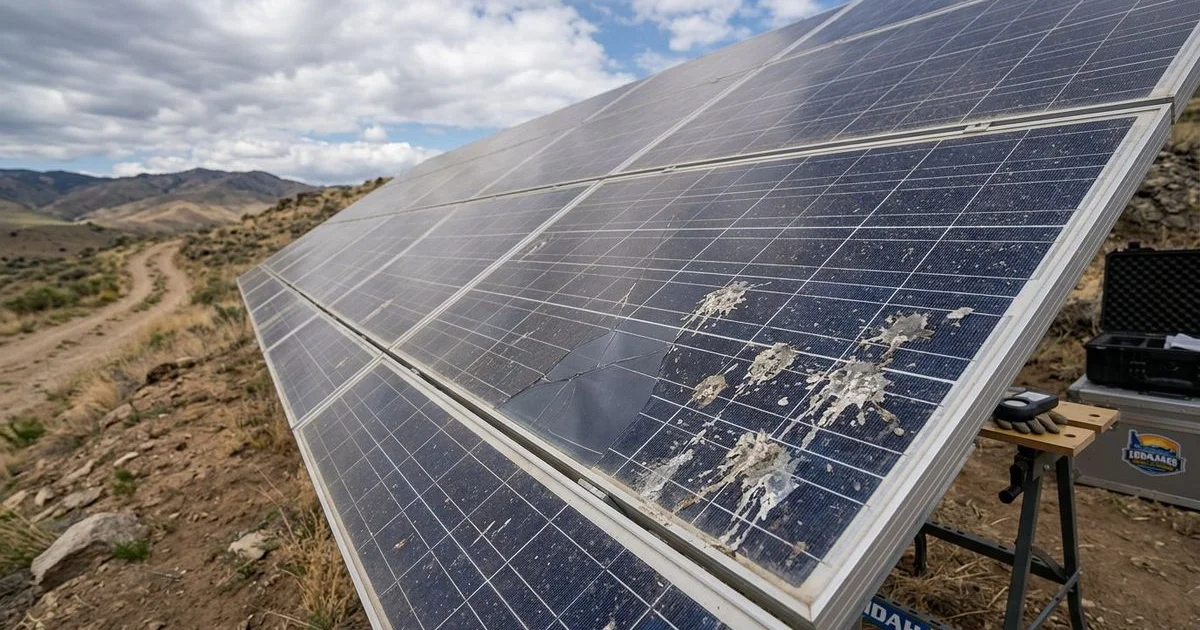
Our performance data reviews confirm that the most immediate and persistently draining cost of bird activity is reduced energy production. A panel with three or four pigeon droppings can easily lose 15 to 25 percent of its rated output.
A fresh bird dropping creates an opaque obstruction that blocks sunlight from reaching the photovoltaic cells underneath. We constantly remind clients that because most residential solar panels wire their cells in series, a single obstructed cell creates a bottleneck. A 2025 study by EcoFlow demonstrated that a system’s overall efficiency can plummet from a potential 20 percent down to just 15 percent when heavily soiled.
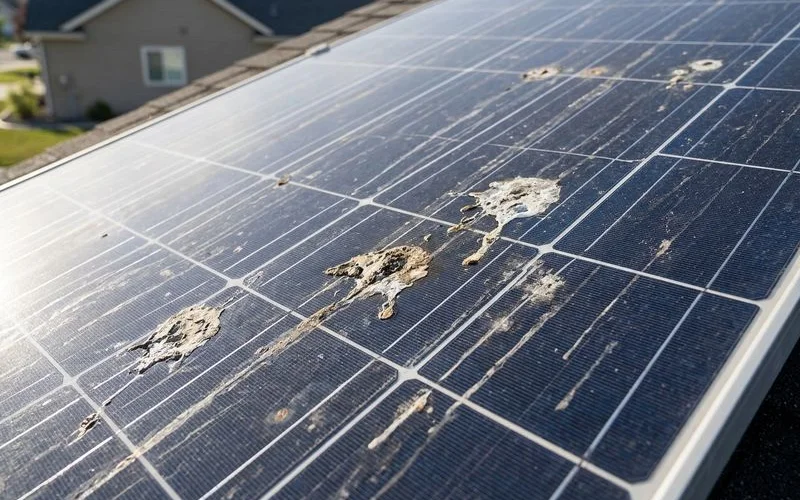
This localized shading drags down the performance of every other cell in that string. Our technicians frequently see systems where this five-point drop in efficiency translates directly into hundreds of lost kilowatt-hours.
This modest production loss translates to 270 to 450 dollars per year in unrealized value. Over a five-year period without intervention, that totals well over a thousand dollars in lost energy production from droppings alone.
Debris Shading and Thermal Losses
We always check the ventilation gap beneath solar panels during routine maintenance to prevent thermal issues. Nesting material that protrudes from beneath panel edges creates partial shading on adjacent panels. When this debris fills the gap, the equipment loses its ability to shed heat through natural convection.
Our thermal imaging inspections reveal that blocked panels can run up to 25 degrees Celsius hotter than properly ventilated units. Recent data from 2025 shows this temperature spike causes an additional 5 to 12.5 percent efficiency loss. These thermal and shading losses remain invisible to the naked eye, but they show up clearly in your monthly production data.
Corrosion and Material Degradation: Slow, Silent, Permanent
Our experts know the physical components of your solar array face relentless wear and tear from wildlife. This chemical and moisture assault attacks the most expensive parts of your investment. Bird droppings carry uric acid concentrations with a pH level between 3 and 4.5.
Anti-Reflective Coating Destruction
We have inspected panels where this acidity caused progressive, irreversible damage to the anti-reflective coating engineered to maximize light transmission. The chemical reaction permanently reduces the panel’s light absorption capability. Once this layer is etched away, no amount of professional cleaning can restore the lost performance.
Our recent pricing analysis shows that replacing a single damaged panel now costs between 1,000 and 1,200 dollars fully installed in 2026. Top-tier residential racking brands in the US, like IronRidge and Unirac, engineer their aluminum frames and galvanized steel hardware to resist normal weathering. They are not designed to withstand constant exposure to concentrated acidic droppings combined with trapped moisture.
Frame, Hardware, and Fastener Corrosion
We consistently find that this chemical assault accelerates corrosion of frame joints, mid-clamps, and the lag bolts anchoring the racking system. Panels that are no longer securely fastened to their rails can shift during high winds.
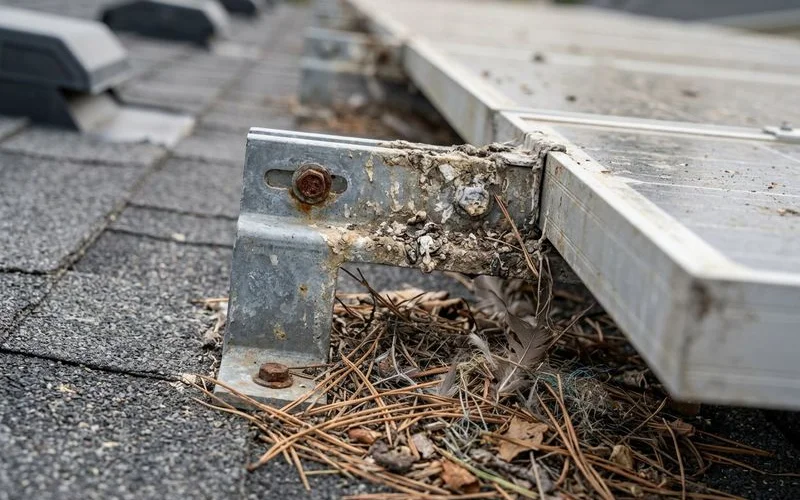
This movement causes micro-cracks in the solar cells and threatens the integrity of the entire roof attachment. Our structural assessments confirm that beneath the panels, accumulated droppings and nesting debris trap moisture directly against your shingles. For homes with asphalt roofing, this persistent moisture exposure accelerates granule loss and rots the underlying waterproof membrane.
Roof Surface Deterioration
Premature roof repair or replacement is among the most expensive hidden costs of bird damage. We have documented sections of roof exhibiting ten years of accelerated wear after only three years of activity. Completing this repair requires the solar array to be completely powered down, detached, and stored while the roofers work. Expect the panel removal and reinstall process alone to cost between 1,500 and 6,000 dollars based on 2025 industry averages.
Electrical Hazards and Fire Risk: The Cost That Matters Most
We view this next cost category as the most critical because it involves not just financial loss but the safety of your family and your home. Animal activity creates multiple electrical hazard scenarios that most property owners completely miss. Data from the Fraunhofer Institute shows fires occur in less than one out of every 10,000 installations.
Wiring Insulation Damage
We want to emphasize that while solar panel fires are rare, animal damage is a leading cause. Birds and rodents are persistent chewers that target the insulation on high-voltage DC conductors and MC4 connectors. These faults generate temperatures exceeding 3,000 degrees Fahrenheit.
Our electricians know that this extreme heat easily ignites the dry twigs, leaves, and plastic wrappers that make up a bird nest. Modern solar junction boxes typically carry an IP65 or IP67 rating, making them highly resistant to dust and water jets. Physical damage from pecking birds can compromise the silicone seals and allow water to penetrate the casing.
Moisture Intrusion in Junction Boxes and Connections
We often run diagnostic tests that reveal moisture inside these boxes causing intermittent ground faults. These electrical anomalies gradually erode safety margins until a major failure event shuts down the system. Addressing this issue requires extensive diagnostic time to pinpoint exactly which panel connections have failed.
Our repair teams typically charge hundreds of dollars in parts and specialized labor to replace damaged junction boxes. If bird damage to your solar installation causes a fire or water damage, your homeowner’s insurance might cover the claim. If the adjuster determines the bird activity was a long-standing, ignored issue, coverage could be heavily disputed.
Insurance and Liability Implications
We have seen insurers use documented evidence of prolonged infestation to argue the homeowner neglected routine maintenance. Insurance companies often classify long-term neglect under specific exclusions that leave the property owner responsible for the bill. These common policy exclusions typically include the following categories:
- General wear and tear.
- Pest and rodent damage.
- Preventable maintenance failures.
- Pre-existing structural neglect.
The Escalating Cost Timeline
Our advice is to keep detailed records of all professional cleaning and maintenance. The total financial impact depends entirely on how long the problem persists before professional intervention. Ignoring the issue allows minor cleaning bills to compound into major structural repair costs.
We use the following timeline to help property owners understand the financial trajectory of unaddressed bird activity.
| Intervention Stage | Typical Remediation Required | Estimated US Costs (2025-2026 Data) |
|---|---|---|
| 0-6 Months (Early) | Professional nest removal, sanitization, and PVC-coated critter guard installation. | $1,800 to $2,500 |
| 1-3 Years (Delayed) | Wiring repair, mounting hardware replacement, and deep cleaning for etched panels. | $2,500 to $5,000 |
| 3+ Years (Severe) | Partial re-roofing, complete electrical rebuilds, and replacement of heavily damaged panels. | $5,000 to $15,000+ |
Prevention Is the Only Strategy That Makes Financial Sense
Every cost category and every dollar figure described in this guide is completely preventable. A professional solar panel bird proofing installation of PVC-coated galvanized steel mesh critter guards seals the gap beneath your panels permanently. Our preferred prevention method entirely eliminates the nesting opportunity and stops the damage cycle before it starts.
Industry data from 2025 shows the average cost for professional critter guard installation ranges from 1,800 to 2,500 dollars. This one-time investment is a fraction of the cost of replacing even two damaged solar panels or fixing a compromised roof. We track national pricing to ensure property owners get the best value for their protective upgrades.
If you notice bird activity around your solar array, do not dismiss it as a trivial nuisance. The costs of neglect are real, largely invisible until they become severe, and grow relentlessly over time. We encourage you to contact a professional for an immediate inspection to protect your renewable energy investment. Take action today to eliminate the hidden cost of bird damage to solar panels permanently.