The Maintenance-Free Myth That Costs Idaho Homeowners Real Money
You know how the standard solar sales pitch usually goes. Install your panels, sit back, and collect free electricity for 25 years.
Our professional solar panel cleaning service team hears this “maintenance-free” myth repeated constantly.
“Install it and forget it” is the most expensive advice a solar owner can follow today.
Installers mention it during presentations. Marketing brochures print it as absolute truth. Do Solar Panels Need Maintenance in Idaho?
The answer is an absolute yes. We know from servicing local systems that this claim is incredibly misleading. Neglected systems actively lose hundreds of dollars in energy production annually.
Let’s look at the hard data and explore practical ways to respond. Our experts will then outline the exact solar panel maintenance program that maximizes your financial returns.
Why Idaho’s Climate Is Uniquely Demanding on Solar Panels
The “maintenance-free” label comes from a narrow mechanical perspective. Solar panels have no moving parts to replace. Our service crews agree they are simpler than a furnace or car engine.
Having no moving parts does not make your panels immune to the environment. They are outdoor equipment fully exposed to everything nature delivers. We face a uniquely harsh combination of weather events here.
Extreme Temperature Swings
The Treasure Valley experiences some of the most dramatic temperature variations nationwide. Summer temperatures routinely exceed 100 degrees Fahrenheit. We measure incredible thermal stress on system components during these seasonal shifts.
Winter temperatures plunge well below zero. This 120-degree range causes repeated expansion and contraction of panel materials. Our diagnostic tools frequently reveal micro-cracks in silicon cells caused by this cycling.
Standard Tier 1 panels naturally degrade 0.5% to 1% per year. Extreme temperature swings accelerate this decline significantly. We catch these hidden issues early with regular professional inspections.
Months of Dust With Almost No Summer Rain
You cannot rely on natural rainfall to wash away summer dirt. Boise averages roughly 12 inches of precipitation per year. Our data shows the vast majority of this falls during winter and spring.
Meaningful rainfall is exceptionally rare from June through September. High desert electrostatic dust clings tightly to glass surfaces. We measure up to a 25% efficiency loss specifically from local agricultural dust.
Sticky pollen acts like a glue that regular wind cannot budge. A thick layer of grime builds up right when panels should be generating maximum power. Our cleaning methods safely remove this stubborn film to restore full production.
Wildfire Smoke That Lingers on Panels
Idaho’s wildfire season creates severe production bottlenecks from June through October. Smoke blocks sunlight while suspended in the atmosphere. We see a second, longer-lasting problem after the visible haze clears.
Fine carbon particles and ash settle permanently on the panel surfaces. The 2025 Wildfire Standard of Care Act highlights these increasing regional fire risks. Our technicians find that untreated ash residue absorbs light incredibly well.
This dark film slashes efficiency through the entire fall and winter.
Snow, Ice, and Winter Mineral Deposits
Winter weather introduces a completely different set of maintenance challenges. Snow can freeze to panel surfaces and persist for weeks during cold spells. We regularly replace mounting hardware stressed by repeated freeze-thaw cycles.
Melting snow carries atmospheric pollutants and roof-surface minerals down the glass. Boise tap water averages 108 parts per million of dissolved minerals. Our team warns homeowners never to rinse panels with this hard tap water.
The calcium and magnesium will bake into the hot glass. This creates permanent mineral spots that make the panels even dirtier.
Bird and Wildlife Activity
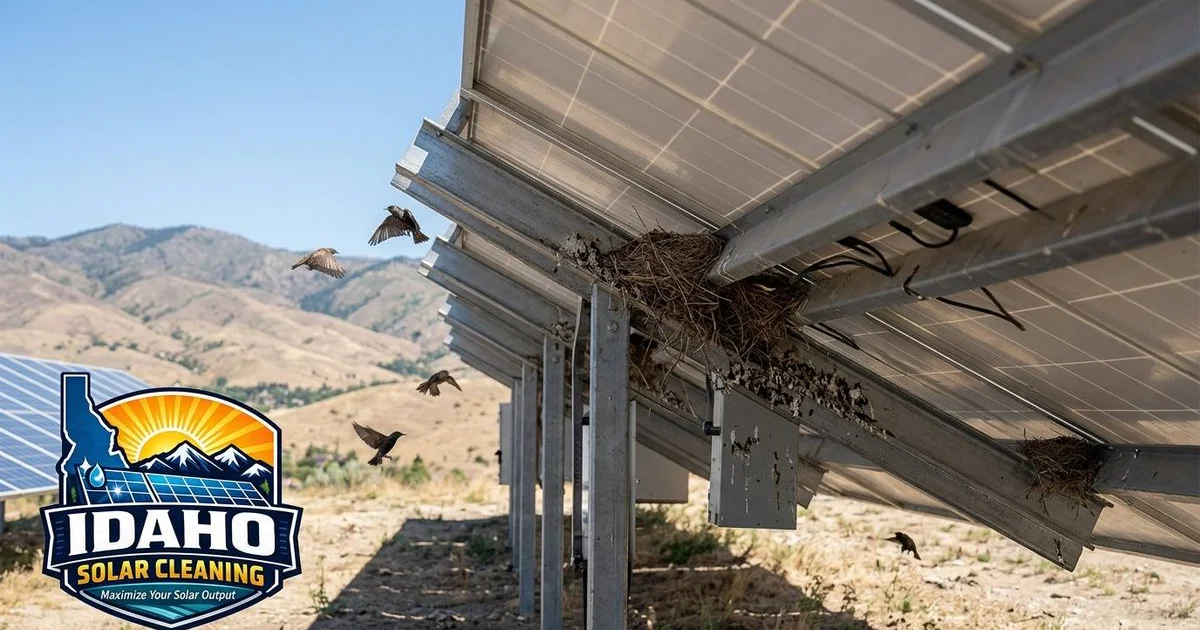
Diverse local wildlife creates genuine safety hazards for rooftop installations. Pigeons and starlings love nesting in the warm gap under panels. We routinely clear out highly flammable nesting materials during inspections.
Squirrels and rodents frequently chew through exposed electrical wiring. A 2025 industry report shows animal damage accounts for 20% of solar system failures. Our standard repair bills for critter damage range from $2,500 to $5,000 per incident.
Physical barrier protection stops this expensive problem before it starts.
What Solar Panel Maintenance Actually Looks Like
Proper maintenance is neither complicated nor prohibitively expensive. It does need to happen regularly and correctly to protect your investment. We break down the essential steps for maximum performance below.
Professional Cleaning Twice Per Year
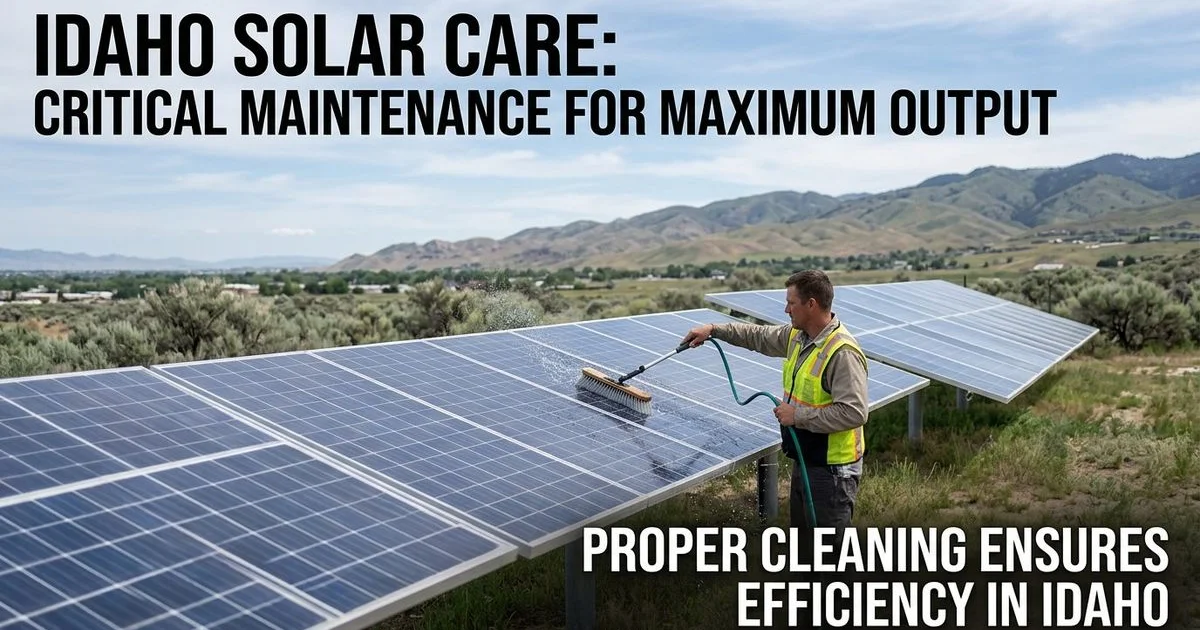
Regular cleaning using purified water is the cornerstone of system care. A deionized water system leaves absolutely zero mineral residue on the glass. Our specialized equipment safely removes tough environmental buildup.
- Spring cleaning (April/May): Removes winter grime and early pollen accumulation.
- Fall cleaning (September/October): Washes away summer dust and stubborn wildfire ash.
Annual Visual and Electrical Inspection
A yearly checkup prevents small issues from causing complete system shutdowns. Qualified technicians look for problems invisible from the ground. We perform a comprehensive checklist during every site visit.
- Visual examination: Checking panels for cracks, discoloration, and physical damage.
- Mounting hardware check: Verifying all bolts, clamps, and rails remain secure.
- Wiring inspection: Looking for corrosion or rodent chewing.
- Roof penetration check: Examining flashing and seals around mounting points.
Advanced Diagnostics and Wildlife Prevention
Older systems require more sophisticated testing to verify performance. Infrared thermal imaging cameras detect hidden hot spots and electrical faults. We recommend a FLIR thermal scan every two to three years.
This service is essential after hailstorms or unexplained production drops. Installing a high-quality critter guard is another crucial protective measure. Our preferred 19-gauge PVC-coated steel mesh costs between $500 and $2,000 to install.
This physical barrier pays for itself by preventing a single wire-chewing incident.
Ongoing Production Monitoring
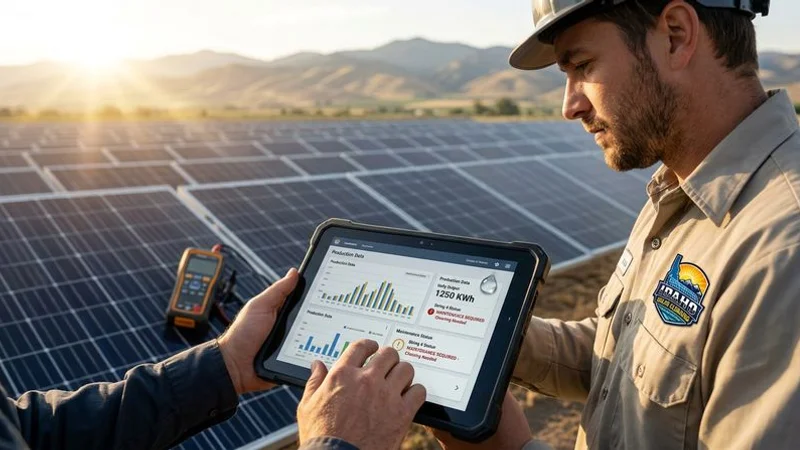
The simplest maintenance tool sits right on your smartphone. Checking your system’s production data requires no rooftop access. We highly recommend tracking daily output through your specific inverter app.
The Enphase App issues a “Microinverter Not Reporting” alert if panels drop offline. A “Low Solar Production” warning appears if output falls below expected thresholds. Our support staff monitors these alerts to dispatch help immediately.
The Real Cost of Skipping Maintenance
Neglect compounds over time to create severe financial losses. Every skipped cleaning makes eventual restoration much harder. We created this timeline to show exactly how degradation progresses.
| Year | Degradation Issue | Expected Output Loss |
|---|---|---|
| Year 1 | Dust and pollen accumulate. Decline blends into seasonal variation. | 5% to 10% |
| Year 2 | Bird droppings create hot spots. Hard water mineral deposits bond to glass. | 10% to 15% |
| Year 3 | Soiling becomes multi-layered. Permanent cell damage begins. | 15% to 20% |
| Year 4 | Minerals chemically degrade the anti-reflective coating. Unseen wiring damage occurs. | 18% to 25% |
| Year 5 | Complex film requires aggressive intervention. Irreversible cell damage locked in. | 20% to 30% |
Maintenance Cost Versus the Cost of Doing Nothing
The financial math heavily favors proactive system care. Regular maintenance for a typical residential system runs $400 to $800 annually. Our typical 25-year service plans cost roughly $10,000 to $20,000 total.
A neglected system loses $150 to $300 per year from soiling alone. Premature panel replacements and denied warranty claims add massive unexpected expenses. We see true neglect costs easily exceeding $15,000 to $25,000 over a system’s lifespan.
Recent utility changes make maximizing your solar efficiency completely essential:
- Rising Costs: Idaho Power raised residential rates by 9.74% in January 2026.
- Decreased Compensation: The Idaho Public Utilities Commission cut solar net metering compensation by 31% in late 2025.
Our clients rely on their panels to offset these painful monthly bill hikes. You earn less for excess power, making self-consumption critical. We know that every lost kilowatt-hour hurts your wallet twice as much today.
Building a Maintenance Plan That Works for You
Solar panels are not maintenance-free in this harsh regional climate. Maintaining them is straightforward and delivers measurable financial returns. Our specialized technicians handle the scheduling and heavy lifting for you.
Purified water systems safely clean your expensive hardware. Detailed documentation protects your warranty coverage.
We ensure your system captures its full lifetime output.
Do Solar Panels Need Maintenance in Idaho? Yes, and waiting until something breaks is the most expensive strategy possible.
Our team is ready to evaluate your setup. Contact us today to establish a routine that protects your investment.