Why Idaho Winters Demand Special Solar Panel Attention
You know how frustrating it is to watch energy production drop the moment the cold season arrives. As a professional solar panel cleaning service team, we see this exact scenario play out across the state every year. The single most important factor in preparing your solar panels for Idaho is proactive fall maintenance.
Boise receives around 18 to 20 inches of snow annually, while mountain towns like McCall get pounded with over 113 inches. Modern tier-1 solar panels are engineered to handle a 5400 Pa snow load, which translates to about 112 pounds of snow per square foot.
Your panels are built to survive the weight of winter.
The real danger lies in hidden damage from constant freeze-thaw cycles and neglected summer debris. I will break down the specific numbers behind winter performance loss and outline the exact preventative steps to protect your investment.
Phase One: Preparing Your Solar Panels for Idaho (October Through Early November)
The window for safe maintenance is narrow in the Treasure Valley. Once the first hard freeze hits by mid-November, your opportunity to prepare the system effectively shrinks. Here is the exact checklist to prioritize.
Schedule a Professional Cleaning Before the Freeze
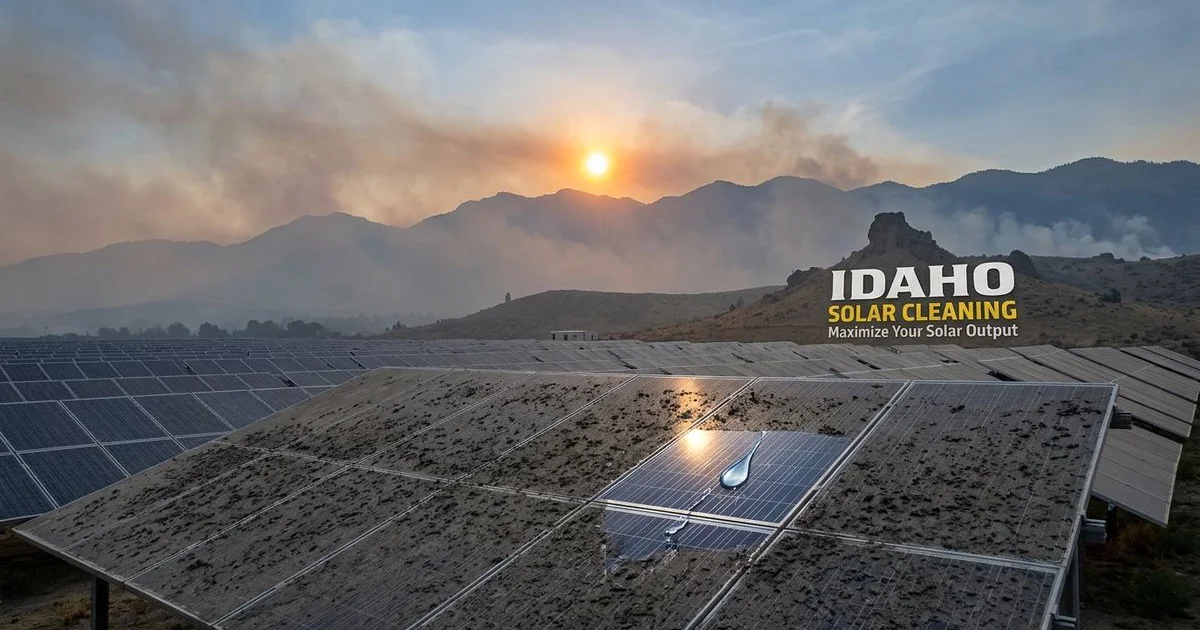
A thorough professional cleaning in October removes the summer buildup of dust, wildfire ash, and pollen. When you leave these contaminants on the glass, they get locked under snow and ice.
Our crews find that these layers bond to the surface in mineral-rich deposits. These deposits are incredibly difficult to remove in the spring.
A recent 2025 study from UC San Diego found that solar panels lose 7.4% of their efficiency after just 145 days without cleaning. You cannot afford to lose that baseline efficiency before the shorter winter days even begin.
Conduct a Comprehensive System Inspection
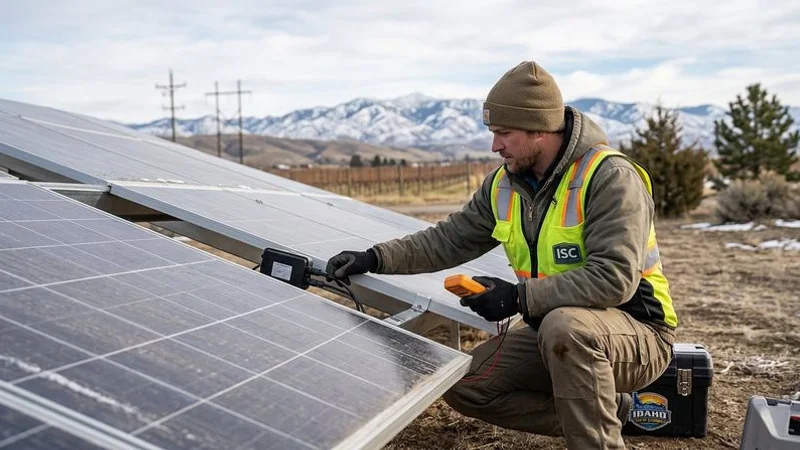
A proper pre-winter inspection needs to cover several critical physical components. Summer heat causes materials to expand, while freezing temperatures force them to contract. This constant shifting creates vulnerabilities.
- Mounting hardware: Check all bolts and clamps. Thermal contraction will worsen any existing slack under the stress of heavy snow loads.
- Wiring and junction boxes: Inspect visible wiring for degraded insulation. You must verify that junction box seals are watertight to prevent ice expansion damage.
- Roof flashing: Confirm that the flashing around penetration points is completely intact.
- Drainage paths: Clear the gutters below the panels so winter runoff has a clear path to escape.
Block Wildlife Nesting with Critter Guards
Pigeons and squirrels constantly look for warm, protected places to hide during an Idaho winter. We frequently discover these animals nesting right underneath residential solar arrays. They chew through essential wiring and cause dangerous short circuits.
A basic visual check is not enough. You must install a PVC-coated steel Critter Guard around the perimeter of the array. This specific wire mesh prevents animals from accessing the underside of the panels without restricting the necessary airflow.
Document Your Baseline Performance
Record your current production numbers before the first snowfall. This baseline gives you a clear reference point for the spring.
You can then compare post-winter performance to identify any hidden efficiency losses.
Phase Two: Surviving the Cold Months (November Through February)
Once the snow starts falling, your primary job is to monitor the system remotely. Resist the urge to climb on the roof and intervene physically.
Leave the Snow Alone
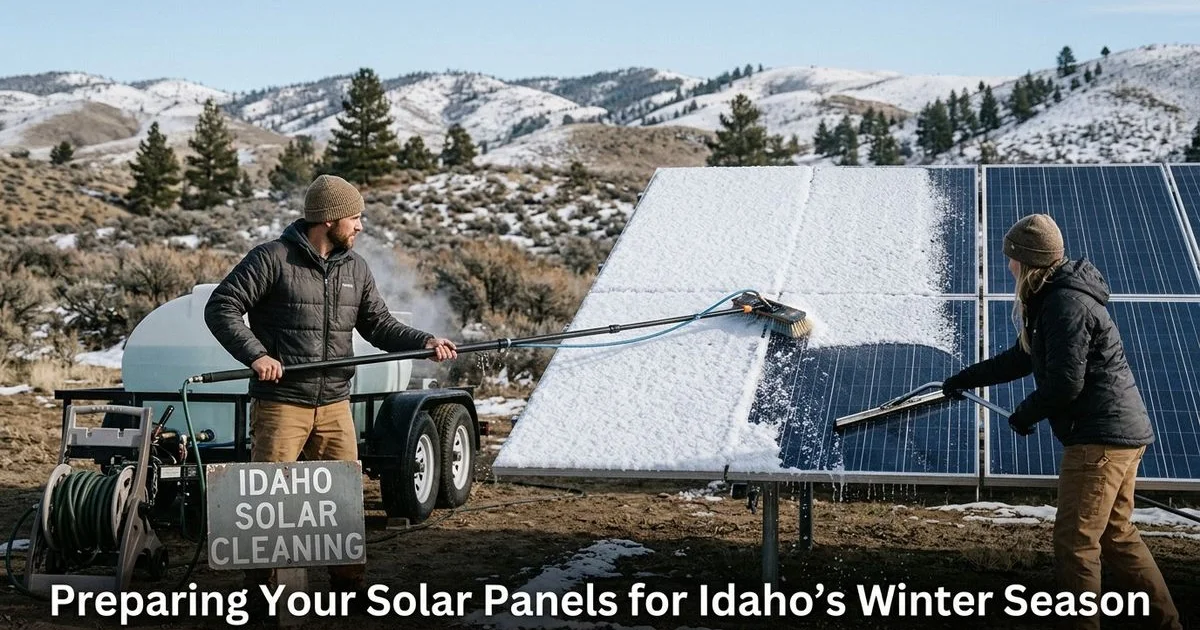
Do not attempt to remove snow from your panels yourself. The tools most people grab, such as shovels or roof rakes, will scratch the anti-reflective coating on the tempered glass.
Applying warm water to a freezing panel will cause immediate thermal shock and shatter the glass.
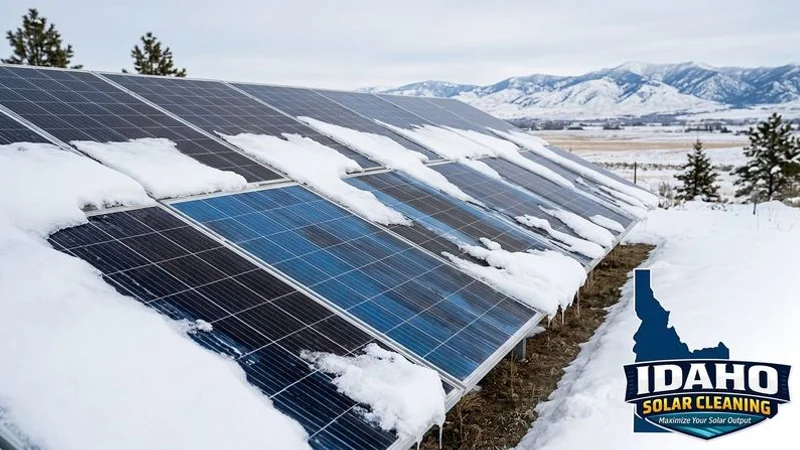
Modern panels shed snow naturally. The dark cells absorb light through thin snow cover, generating heat that melts the layer touching the glass. The tilt angle then allows the snow to slide right off.
Watch for Ice Dam Formation
Ice dams along the lower edge of the panels present a serious threat. Snow melts from the upper sections and refreezes when it hits the colder gutter line.
This creates a solid block of ice that adds concentrated weight to your lower mounting points.
If you spot significant ice buildup from the ground, call a professional. Standing water trapped behind these dams can easily reach electrical connections and trigger system failures.
Monitor Production Data Remotely
Keep an eye on your monitoring application throughout the winter. We highly recommend checking your Enphase App or SolarEdge monitoring portal weekly. You might see a “Microinverter Not Reporting” error message after a heavy snowstorm.
This error is completely normal when panels are buried. The microinverters enter a low-power sleep mode to protect themselves until the snow clears. Once the sun melts the snow, the communication link will restore itself automatically.
The Cold Weather Efficiency Boost
Many people assume panels perform poorly in the cold. The exact opposite is true. Solar panels actually operate more efficiently in freezing temperatures due to their unique temperature coefficient.
A standard monocrystalline panel features a temperature coefficient of roughly -0.38% per degree Celsius. This means that for every degree the temperature drops below 25°C (77°F), the panel’s efficiency increases by 0.38%.
| Temperature | Efficiency Change (Based on -0.38% Coefficient) |
|---|---|
| 77°F (25°C) | Baseline (0% change) |
| 50°F (10°C) | +5.7% Efficiency Gain |
| 32°F (0°C) | +9.5% Efficiency Gain |
| 14°F (-10°C) | +13.3% Efficiency Gain |
On a clear, freezing day in Boise, your system will convert sunlight into electricity much faster than it does in July.
Phase Three: Post-Winter Recovery (March Through April)
Spring in the Treasure Valley reveals the true payoff of your winter preparation. Systems that received proactive care will recover much faster than neglected setups.
Schedule a Spring Cleaning Promptly
Schedule a professional spring cleaning as soon as temperatures consistently stay above freezing. This usually happens by mid-March in the Boise area.
Winter leaves behind tough mineral deposits, snowmelt residue, and early spring pollen.
Data from the National Renewable Energy Laboratory (NREL) shows that spring pollen alone can reduce energy output by over 15% in heavily forested areas. A quick professional rinse removes this sticky film and restores your system to its maximum production capacity.
Request a Post-Winter Damage Assessment
A post-winter inspection is crucial for catching subtle damage caused by extreme temperature swings. We utilize this time to check for loosened mounting hardware and degraded edge seals. The harsh freezing and thawing process often stresses the silicon cells inside the panels.
Recent mechanical stress testing from PV Evolution Labs (PVEL) proves that repeated thermal cycling creates micro-cracks in the solar cells.
These tiny fractures propagate through the metallization lines over time, leading to a permanent power loss of 1% to 5%. Securing loose hardware early prevents these micro-cracks from spreading.
Compare Performance Against Your Baseline
Pull up the baseline numbers you recorded back in October. Compare them directly to your current spring output.
Any significant deviation that weather cannot explain points to degradation that developed during the winter. Review these three metrics in your app:
- Peak Wattage: Is the system hitting the same daily high under clear skies?
- Total Daily Yield: Are the overall kilowatt-hours matching previous clear days?
- Individual Panel Variance: Is one specific microinverter reporting much lower numbers than its neighbors?
Year-Round Protection Starts with a Plan
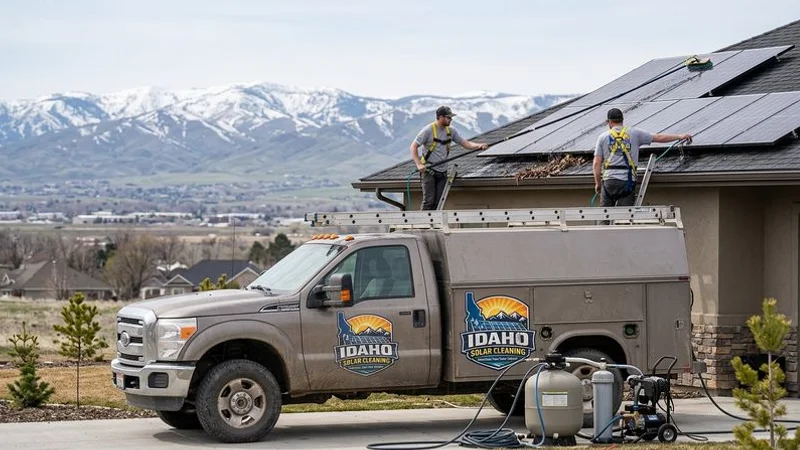
The most effective approach to winter solar panel care is never a last-minute scramble before a storm. Preparing your solar panels for Idaho requires a dedicated maintenance schedule timed perfectly to the seasonal cycle of the state.
Our solar panel maintenance program handles the pre-winter preparation, monitors conditions throughout the cold months, and schedules spring recovery service. This ensures your system transitions seamlessly from season to season without losing efficiency.
Idaho winters are demanding, but they do not have to be destructive. You can protect your investment with the right preparation and prompt post-winter recovery. Contact our team today to schedule your pre-winter cleaning and inspection before the first freeze hits the Treasure Valley.