We talk with property owners every day who think their solar panels are entirely maintenance-free. Professional solar panel cleaning is essential for protecting your energy investment.
That assumption often leads to a silent, steady drop in energy generation.
You cannot easily see roof-mounted equipment up close to judge how dirty the glass surface is. By the time visible grime appears from ground level, the system has likely been underperforming for months.
Let us look at the data, identify the exact indicators of performance loss, and explore practical ways to respond.
Here are the top 5 signs your solar panels need cleaning to restore peak efficiency.
Sign 1: Your Energy Production Has Dropped
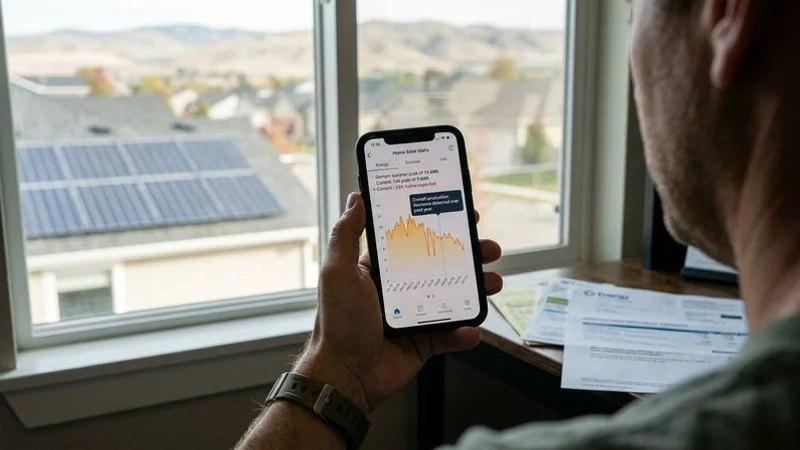
A measurable decline in output is the most reliable indicator that your array needs attention. Every modern installation comes with monitoring software like the Enphase App or the SolarEdge mySolarEdge portal.
Our technicians recommend checking these digital dashboards at least once a month.
What to Look For
- A gradual decline in daily or monthly production compared to the same period in previous years.
- Production numbers that sit 10 percent or more below system ratings given current weather conditions.
- Sudden drops that do not correspond to cloudy weather or seasonal changes.
- Inconsistent production where some days look normal while others drop significantly.
Why This Happens
As dirt, dust, pollen, and bird droppings accumulate, less sunlight reaches the photovoltaic cells. This physical barrier blocks electricity generation even on perfectly sunny days. A 2024 report from the National Renewable Energy Laboratory (NREL) noted that soiling can reduce energy yield by up to 25 percent in arid United States regions during long dry spells.
Expected vs. Actual Output
To put this into perspective, compare the potential power loss on a standard residential setup. If you see numbers resembling the “Dirty Panel” column below, your system needs immediate attention.
| System Size | Clean Panel Daily Average (Summer) | Dirty Panel Daily Average (15% Loss) | Lost Kilowatt-Hours |
|---|---|---|---|
| 6 kW | 30 kWh | 25.5 kWh | 4.5 kWh per day |
| 8 kW | 40 kWh | 34.0 kWh | 6.0 kWh per day |
| 10 kW | 50 kWh | 42.5 kWh | 7.5 kWh per day |
Sign 2: You Can See Visible Dirt or Staining From the Ground
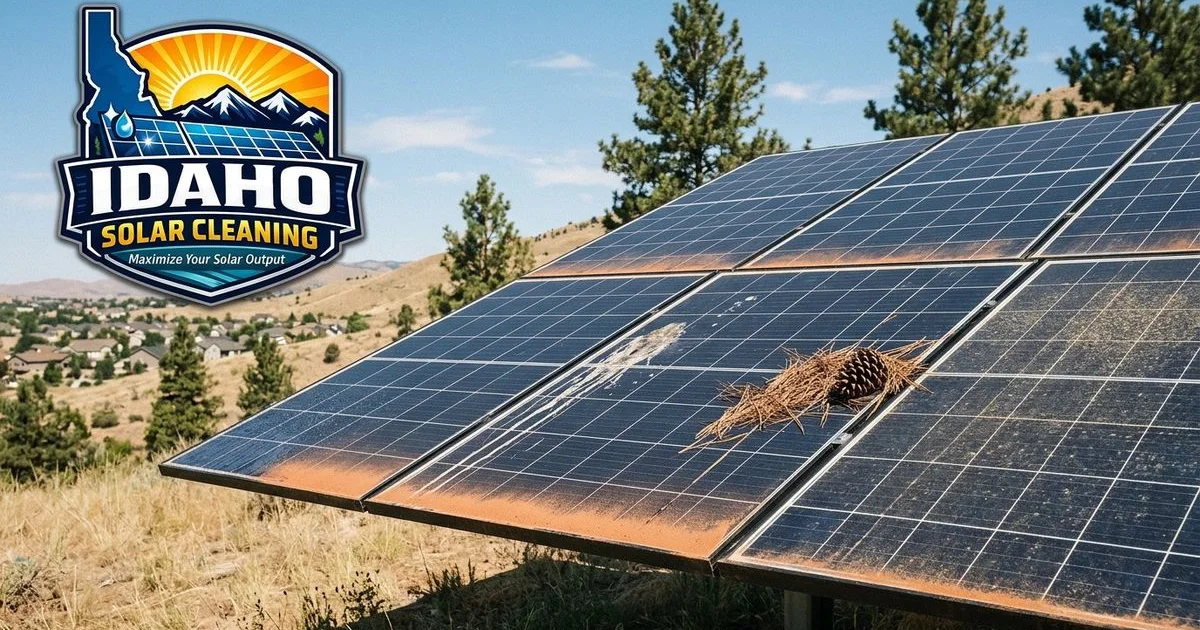
If you can spot grime from your yard or driveway, the glass is already heavily coated. Installers place arrays at a specific angle and distance where minor dust remains invisible to the naked eye from below.
We consider visible ground-level staining a critical alert for system health.
Common Visible Issues in the US
- White or gray streaks from bird droppings near the panel edges.
- Yellow-green film from heavy spring tree pollen, common across the Southeast and Pacific Northwest.
- Brown or tan dust layers resulting from dry summer conditions in the Southwest or regional agricultural drift.
- Dark patches from biological growth such as lichen, which thrives on panels receiving partial shade.
- White spots or haze from mineral deposits caused by sprinkler overspray.
The Hidden Danger of Staining
Visible soiling confirms you have been losing energy production for an extended period. More importantly, specific types of buildup cause permanent physical damage. Uric acid from bird droppings has a highly corrosive pH level between 3 and 4.5. This acidity eats directly through the delicate anti-reflective coating on the solar glass.
Mineral deposits from hard tap water also bond to this protective coating and cause irreversible clouding that blocks sunlight permanently.
Sign 3: Your Electricity Bills Are Higher Than Expected
Rising utility costs often point straight back to dirty panels. Many property owners immediately blame utility rate hikes for higher bills without checking their solar dashboard.
Our billing analysis frequently reveals that underperforming hardware is the true source of the extra expense.
How to Spot This Sign
- Compare your current bills to the exact same months in previous years.
- Check your net metering credits to see if they decreased despite your household usage remaining stable.
- Look for billing cycles where you pulled more power from the grid than your solar setup should require.
- Calculate your cost per kilowatt-hour to verify if it increased relative to your expected offset.
The Financial Impact
The US Energy Information Administration reported that national average residential electricity rates hovered around 16.6 cents per kilowatt-hour recently. When your dirty panels produce less energy, you instantly pull more expensive electricity from the local grid during peak hours.
A 15 percent production loss on a standard 8 kW system translates to roughly $20 to $30 per month in additional grid electricity costs. Over a six-month dry season, that equals up to $180 in completely avoidable utility expenses. A simple maintenance wash pays for itself by eliminating these unnecessary grid charges.
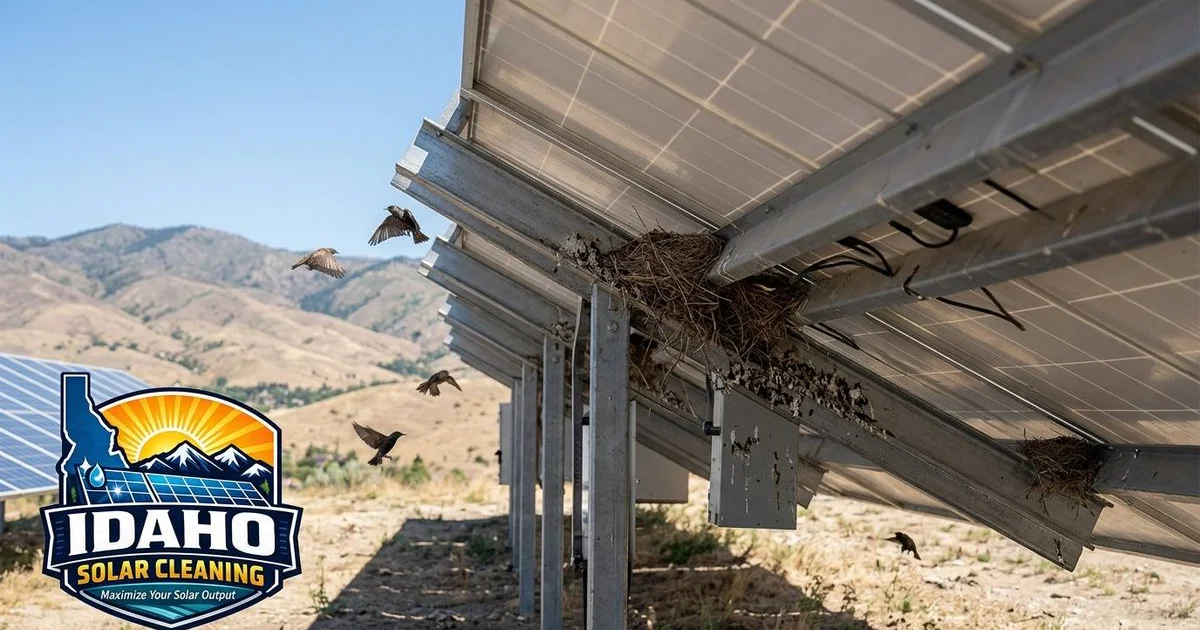
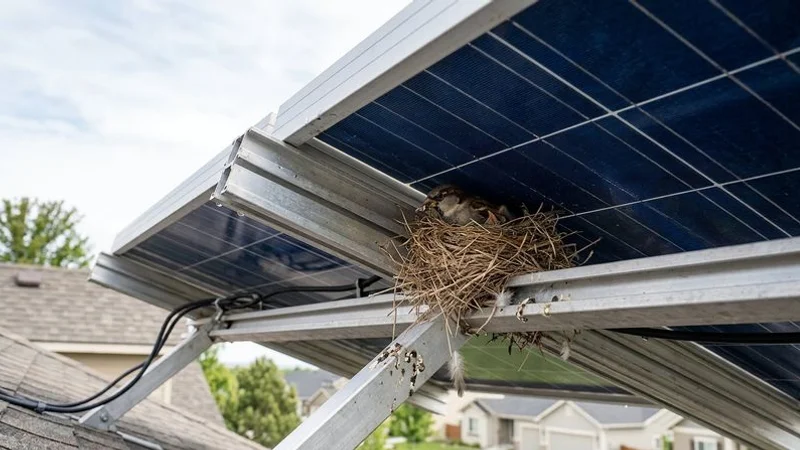
Sign 4: Birds or Animals Are Active Around Your Panels
Frequent bird landings or nesting activity demand an immediate response. Critters create a direct threat to system performance, safety, and longevity.
We see immense physical damage caused by wildlife nesting under arrays every single year.
Signs of Animal Activity
- Birds perching on panel edges or flying into the tight gap between the modules and your roof.
- Nesting materials like sticks, dried grass, or feathers visible at the array edges.
- Concentrated droppings blanketing specific panels or roof sections.
- Scratching sounds echoing from your attic or roof area at dawn and dusk.
- Chewed wiring visible near the panel edges.
Why This Demands Immediate Attention
A single nesting pair of Rock Doves (common pigeons) can produce over 50 pounds of waste annually. That concentrated volume of highly acidic droppings causes rapid efficiency loss and creates permanent hot spots on the affected photovoltaic cells. Squirrels chewing on exposed microinverter cables also trigger immediate system ground faults.
If you spot these issues, schedule a comprehensive residential solar panel cleaning and a solar panel inspection to assess the hardware and install protective critter guards.
Sign 5: It Has Been Six Months or More Since Your Last Cleaning
The simple passage of time serves as a highly reliable maintenance trigger. Most major solar manufacturers suggest regular visual inspections and periodic washing to maintain peak output.
Our field data confirms that waiting longer than six months usually results in measurable efficiency drops.
Seasonal Soiling Factors
Distinct seasonal challenges coat solar arrays throughout the year:
- Spring: Heavy tree pollen coats panels with a sticky, yellow film that standard rain cannot easily wash away.
- Summer: Extended dry periods, active construction, and agricultural dust build up a thick particulate layer.
- Fall: Wildfire smoke residue, falling leaves, and early morning condensation trap airborne dirt against the glass.
- Winter: Snowmelt leaves behind mineral bands, while freeze-thaw cycles trap urban smog against the modules.
A biannual washing schedule represents the minimum standard for property owners who want maximum financial returns.
The First-Time Wash Advantage
Property owners who skip maintenance for years accumulate baked-on layers of grime. The very first professional wash often recovers 15 to 25 percent of total system capacity. For an average US residential system, that means recovering hundreds of dollars in annual energy production that you did not even know went missing.
What Should You Do If You Notice These Signs?
Spotting any of these indicators means it is time to schedule a specialized service visit. DIY washing using a garden hose often does more harm than good.
We strictly use purified water systems because standard tap water ruins solar glass.
Why Professional Service Wins
- Water Purity: Professionals use deionized water filtration systems that bring the Total Dissolved Solids (TDS) reading down to zero parts per million. This leaves the glass spot-free without mineral scaling.
- Safety Compliance: Roof work carries extreme fall risks, and professional crews carry the right safety harnesses and insurance policies.
- Expert Tools: Technicians use specialized water-fed poles equipped with non-abrasive boar bristle brushes designed specifically for delicate solar glass.
- Hardware Inspections: Trained eyes catch early warning signs like micro-cracks, moisture ingress, and frayed wiring that homeowners easily miss.
- Warranty Protection: Manufacturers will void your equipment warranty if you use abrasive sponges, harsh chemical soaps, or high-pressure washers.
Take Action Today
Your rooftop array represents a massive financial investment. Neglect and environmental buildup directly erode the utility savings you expected when you signed your installation contract.
Our crews are ready to help you recover that lost power.
Schedule a professional residential solar panel cleaning today to safely clear away the grime. We will evaluate your hardware, wash the glass with our spot-free purified water system, and provide a thorough solar panel inspection to guarantee everything operates flawlessly.